By Jerry Critchfield – Vice President, Transportation
Choosing a regional transportation partner looks like a straightforward decision until your carrier misses a delivery window, can’t cover a lane, or runs out of capacity during peak season. Most brands evaluate transportation options on price and general coverage area. Both matter, but neither tells you whether that partner can actually move your product when and where it needs to go.
The more important questions are about model and infrastructure. A regional transportation partner that only operates an owned fleet covers certain lanes very well and struggles with others. One that only brokers freight can access a wide network but hands off control with every load. Understanding the difference before you commit is what separates a partner that holds up under pressure from one that creates problems at the worst time.
What You’ll Learn:
- The difference between asset-based and brokerage transportation models and what each one does well
- Why coverage area and actual capacity are not the same thing
- What a hybrid transportation model offers that single-model providers cannot
- The questions that matter most when evaluating a regional transportation partner
- How to match a transportation partner to your distribution lanes and delivery requirements
Coverage and Capacity Are Not the Same Thing
When a carrier says they cover Southern California, that tells you where they operate. It doesn’t tell you how many trucks are available on a Tuesday morning in the Inland Empire, or whether they can pick up a same-day load when standard capacity is already committed. Coverage describes the geography. Capacity determines whether your freight actually moves.
Asset-based carriers own their trucks and employ their drivers. That gives them direct control over equipment and scheduling, which translates to reliability on the lanes they serve consistently. The constraint is fixed capacity. When demand surges or a shipment falls outside their normal routes, their ability to help drops off quickly. A regional transportation partner running only an owned fleet will serve you well right up until they can’t.
For CPG food and beverage brands distributing across Southern California and Phoenix, that ceiling matters. Retailer compliance windows are tight, and a partner that runs out of capacity during peak season creates the kind of downstream problems that take weeks to sort out. Understanding how geography affects delivery speed and cost in this region is the first step toward choosing the right partner for it.
Asset-Based and Brokerage Transportation Don’t Work the Same Way
Freight brokerages don’t own trucks. Instead, they build networks of carrier relationships and match your freight to available capacity. That model makes them highly flexible. They can cover unusual lanes, absorb volume spikes, and source trucks when owned fleets are at capacity. According to the 2025 Inbound Logistics 3PL Perspectives report, 57% of 3PLs now offer both asset-based and non-asset-based services, which reflects how much the market has shifted toward hybrid models as brands push for both reliability and flexibility. The tradeoff with pure brokerage is that the carrier moving your product changes from load to load, which introduces variability in handling and consistency.
Both models have real strengths. The table below breaks down how they compare across the factors that matter most for regional distribution.
| Asset-Based | Brokerage | |
|---|---|---|
| Equipment | Owned fleet | Partner carriers |
| Coverage | Core regional lanes | Broad and flexible |
| Consistency | High on regular lanes | Variable by carrier |
| Capacity | Fixed | Scalable |
| Best for | Dedicated regional lanes with consistent volume | Overflow, unusual lanes, and volume spikes |
Why the Best Regional Transportation Partners Operate Both Models
A regional transportation partner that runs both an owned fleet and a brokerage network gives you something neither model provides on its own: redundancy. When the owned fleet is at capacity, the brokerage network absorbs the overflow. When a specific lane needs consistent, dedicated service, the asset-based side covers it. The result is a coverage model that doesn’t have a hard ceiling.
For LA metro and Phoenix metro distribution, this matters in a specific way. Same-day order cutoffs and next-day delivery windows are only realistic when the carrier serving those lanes has owned assets in the region and doesn’t depend on a third-party carrier to show up. A hybrid provider can commit to that standard because they control the capacity it requires. A pure brokerage cannot make that guarantee with the same consistency. Inbound Logistics outlines the key flags to watch for when evaluating any logistics provider, and capacity reliability sits near the top of that list.
States Tip: Ask any prospective transportation partner to specify which lanes they cover with owned assets and which they broker out. That answer tells you exactly where they are reliable and where they are depending on someone else to deliver.

Questions to Ask a Regional Transportation Partner
Evaluating a regional transportation partner comes down to knowing what to ask. These questions get past the surface and into the operational reality.
- Which lanes do you cover with your own fleet, and which do you broker? The answer tells you where their reliability starts and where it depends on someone else.
- What is your delivery standard for LA metro and Phoenix metro? A committed next-day window requires owned capacity in the region, not brokered trucks sourced day-of.
- How do you handle overflow when your fleet is at capacity? The answer reveals whether they have a brokerage network in place or simply turn freight away.
- What is your retailer compliance track record for Southern California distribution centers? Familiarity with local retail DC requirements matters as much as truck availability.
- Do you provide real-time shipment visibility? Technology integration with your WMS or order management system shortens response time when issues come up.
Getting the Right Regional Transportation Partner in Place
The right regional transportation partner covers your lanes when things run smoothly and holds up when they don’t. That combination of consistency on core routes and flexibility when volume or geography pushes beyond them is what separates a partner worth building on from one that becomes a liability as your brand scales.
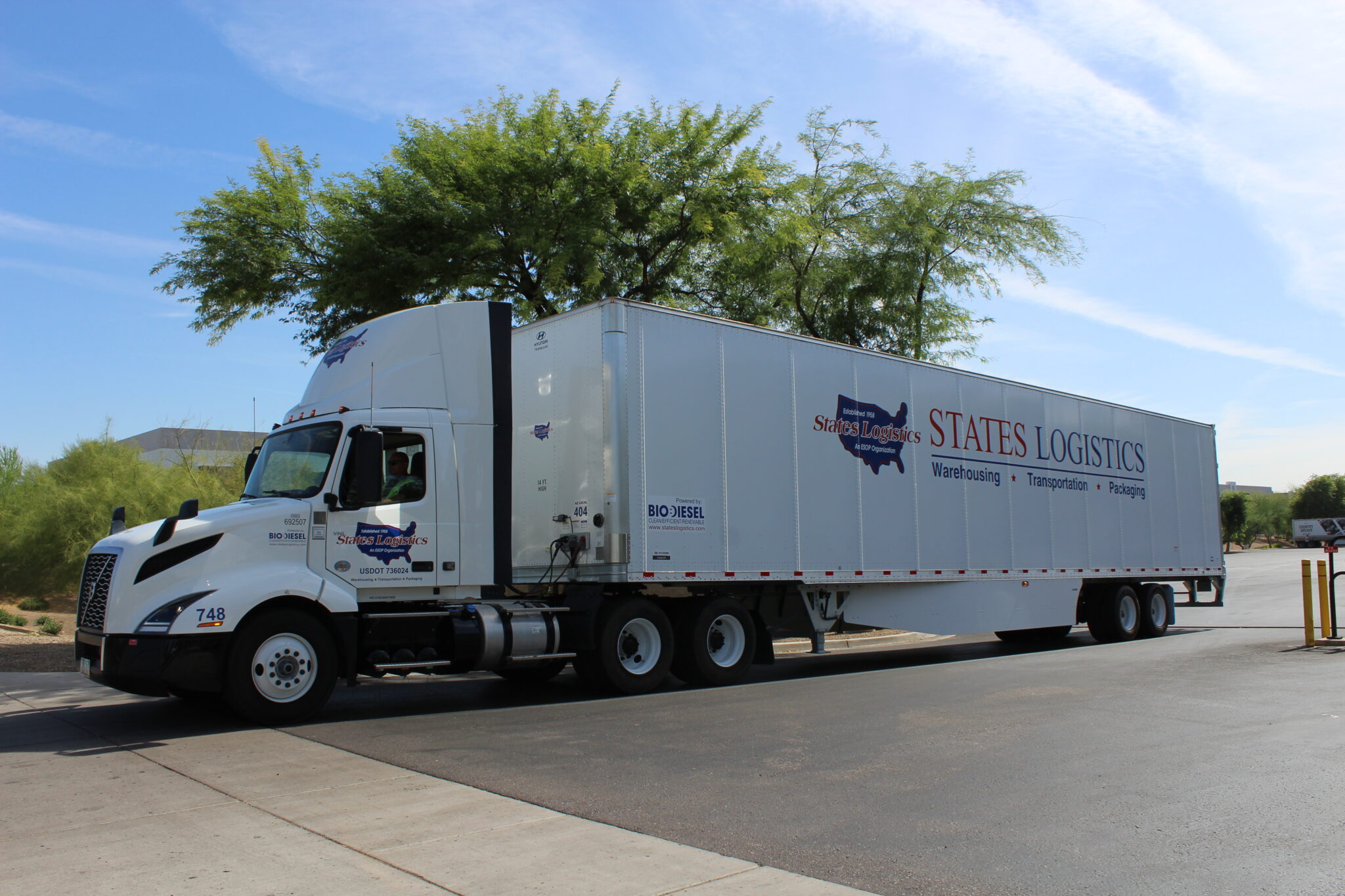
For CPG food and beverage brands distributing across Southern California and Phoenix, States Logistics Services, Inc. operates both an asset-based fleet and a brokerage network across 13 facilities, with regional transportation coverage that includes 24-hour delivery for LA metro and Phoenix metro lanes.
Frequently Asked Questions
What is the difference between asset-based and brokerage transportation?
An asset-based carrier owns its own trucks and employs its own drivers, giving it direct control over equipment and scheduling. A freight brokerage does not own equipment. Instead, it matches your freight to available capacity through a network of carrier relationships. Asset-based providers offer more consistency on the lanes they serve regularly. Brokerage providers offer more flexibility and can cover a wider range of lanes and volume levels.
Why does the transportation model matter for regional CPG distribution?
Regional CPG distribution often involves tight delivery windows, retailer compliance requirements, and volume that shifts by season or promotion. A transportation partner operating only one model has a ceiling — either in flexibility or in consistency. A partner running both can handle steady-state volume on core lanes and absorb overflow without routing your freight through a separate provider with less visibility and accountability.
What delivery standard should I expect from a regional transportation partner in Southern California?
For LA metro lanes, a partner with owned assets in the region should be able to commit to next-day delivery when orders are placed by a set cutoff. That standard requires the carrier to control its own capacity in the market. A brokerage-only provider depends on third-party carriers and cannot guarantee that window with the same consistency, particularly during peak seasons when available capacity tightens across the board.
How do I evaluate a transportation partner’s capacity during peak season?
Ask specifically what happens when their owned fleet is fully committed. A partner with a brokerage network can source additional carriers to cover overflow. One without that capability will either decline the freight or broker it through an outside party without the same visibility or accountability. The answer to that question tells you more about peak reliability than any service level agreement will.
Does my regional transportation partner need food-grade certifications?
For packaged CPG food and beverage products that are shelf-stable, most standard regional carriers can handle the freight without specialized certifications. If your product requires temperature control, specific handling standards, or compliance with FSMA requirements, confirm those capabilities before committing. For brands with food-grade warehousing needs, working with a transportation partner whose operations fall under the same certifications simplifies compliance considerably.
Should my regional transportation partner also handle warehousing?
There are real advantages to consolidating both under one provider. When transportation and warehousing are managed separately, every outbound shipment requires coordination between two vendors. When they operate under one roof, the handoff is internal — which shortens lead times, reduces communication overhead, and gives you a single point of accountability when something goes wrong.