By Eric Vanderwall, Transportation Operations Manager
Freight costs have a way of sneaking up on food and beverage brands. A reefer surcharge here, a reclassification fee there, a retailer chargeback because the carrier made three extra stops. None of it feels catastrophic in the moment, but it adds up. And most of it traces back to freight decisions that didn’t account for the full picture.
Understanding when to use LTL and FTL freight, and what temperature-controlled shipping actually adds to the equation, is where the savings usually live. Here’s what you need to know.
What You’ll Learn:
- When LTL saves you money and when it quietly costs you more
- How to get more out of FTL without paying for empty trailer space
- What temperature-controlled freight actually adds to your bill
- How the 2025 freight classification changes affect food and beverage shippers
- What to look for in a transportation partner that handles all three
LTL Freight: The Hidden Costs Behind the Lower Rate
LTL means you’re sharing trailer space with other shippers and paying only for what you use. On paper, it’s the obvious choice for smaller loads. In practice, it’s a little more complicated than that.
LTL works well when you’re moving one to ten pallets to multiple retail locations, running regular replenishment cycles, or distributing to accounts that don’t need a full truck. The cost per pallet is lower than booking a dedicated trailer for a partial load, and for brands that are still growing their account list, it’s usually the right call.
Where it gets expensive is the extras. Liftgate fees, redelivery charges, appointment scheduling, residential surcharges. These stack on top of the base rate in ways that aren’t always clear at quote time. On top of that, the NMFTA overhauled freight classification in mid-2025, moving from commodity-based to density-based pricing. For most food and beverage shippers, that’s actually good news since packaged goods tend to have favorable density. But only if your dimensions and weights are accurate. Get them wrong and the carrier reclassifies your freight at pickup, and you pay the difference plus a fee.
States Tip
Before you book LTL, calculate your shipment density: weight in pounds divided by volume in cubic feet. Getting this right upfront protects you from reclassification charges that can seriously inflate your final invoice.
FTL Freight: When Dedicated Space Pays for Itself
With FTL, you’re booking the whole trailer. You pay for it whether it’s full or not, which is why a lot of brands assume it’s always the pricier option. That’s not always true when you look at total cost.
FTL tends to make more sense in these situations:
- High volume to a single stop: Once you’re north of 10 to 14 pallets, the per-pallet cost on FTL often drops below LTL rates. The breakeven depends on weight and lane, but it’s worth running the numbers.
- Tight delivery windows: FTL goes point-to-point. No terminal stops, no co-loading, no waiting for another shipper’s freight. If you’re delivering to a retailer with a strict receiving window, that matters.
- Fragile or high-value product: Every stop in an LTL network is another handling event. Specialty foods, premium beverages, and confectionery that can’t absorb damage claims are better off on a dedicated truck.
- Seasonal pushes: When you need to move a lot of product fast, FTL gives you control over timing that LTL consolidation just can’t match.
The biggest lever with FTL is load optimization. A trailer running 60% full is paying for 40% of air. Brands that plan their production and order timing around full loads consistently pay less per unit than those booking FTL reactively. Working with a transportation partner that runs both asset-based and brokerage gives you the flexibility to shift modes when your volume calls for it.
States Tip
If you’re regularly moving 8 to 12 pallets and your LTL accessorial charges keep climbing, run a comparison against FTL rates on your busiest lanes. The math often surprises people who assume LTL is always cheaper at that pallet count.
| LTL | FTL | |
|---|---|---|
| Best for | 1-10 pallets, multiple destinations | 10+ pallets, single destination |
| Pricing model | Per pallet/hundredweight plus accessorials | Flat rate per trailer regardless of fill |
| Transit time | Longer; multiple terminal stops | Faster; point-to-point routing |
| Damage risk | Higher; more handling events | Lower; no co-loading or terminal transfers |
| Cost watch-out | Accessorial charges inflate base rate | Paying for empty trailer space on partial loads |
| Temperature-controlled | Available; more door openings increase variance risk | Full temperature control, no shared exposure |
Temperature-Controlled Freight: The Layer That Changes the Math
Temperature-controlled freight isn’t a third shipping mode. It’s a condition that applies to both LTL and FTL. A reefer trailer can run either way depending on your load size. What it adds is cost, fewer carrier options, and a set of requirements that catch a lot of shippers off guard.
For food and beverage brands, the reality is pretty straightforward. Demand for refrigerated and frozen product keeps growing while cold storage capacity near major ports stays tight. That gap pushes reefer rates up, especially during peak seasons and on West Coast lanes.
Here’s where the costs come from:
- Equipment premiums: Reefers cost more to run than dry vans. Higher fuel burn, more maintenance, smaller carrier pool. Those costs get passed to you in the rate.
- Pre-cooling time: The trailer needs to hit target temp before loading. Brands that don’t build this into their pickup window end up with delays that ripple through the whole delivery schedule.
- Temperature monitoring: FSMA requires documented temp records throughout transit. Carriers without in-cab monitoring create compliance gaps that can come back to bite you.
- Multi-stop reefer LTL: Every time the trailer door opens on a shared load, you get temperature variance. For products with tight tolerances, that’s a real risk, and sometimes worth paying more for a dedicated FTL lane.
The cost-reduction play here isn’t hunting for the cheapest reefer carrier. It’s matching the equipment to what your product actually needs. Craft beverages, specialty chocolates, and products that just need protection from heat spikes or freezing often don’t need full refrigeration. There are lower-cost equipment options that still meet compliance requirements if you know what to ask for.
States Tip
Ask your carrier what temperature documentation they provide at delivery. If they can’t produce continuous in-transit records quickly, that’s worth knowing before you commit to a lane, especially if you’re distributing to major retailers.
| Equipment Type | Best For | Cost Relative to Reefer FTL |
|---|---|---|
| Dry van | Shelf-stable CPG, no temperature sensitivity | Lowest |
| Vented van / freeze protect | Products needing protection from heat spikes or freezing only | Low to moderate |
| Reefer LTL | Smaller refrigerated loads, multiple destinations | Moderate |
| Reefer FTL | High-volume perishables, tight temp tolerances, single destination | Highest |
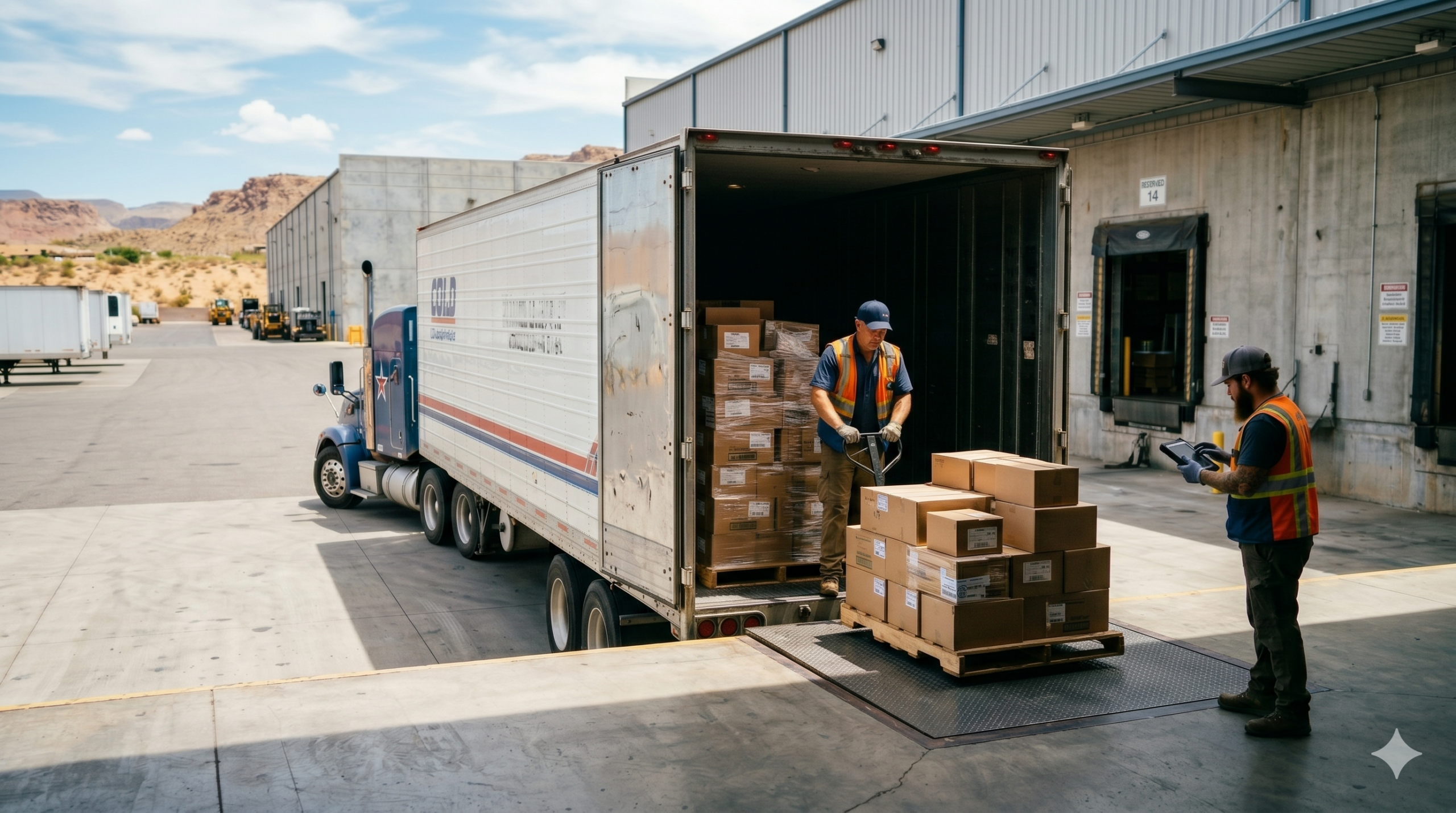
How Your 3PL Affects All Three
These freight decisions don’t happen in a vacuum. Where your product is stored, how fast orders get processed, and how close your warehouse is to your retail accounts all affect what LTL and FTL freight actually costs you on any given lane.
A 3PL in Southern California puts your inventory close to the ports of LA and Long Beach for brands moving product through West Coast channels, and within next-day reach of one of the biggest retail distribution networks in the country. Geography has a direct impact on freight speed and cost. Shorter lanes mean lower rates, fewer touches, and tighter shelf-life management for anything temperature-sensitive.
Regional positioning also matters for delivery speed. For brands running the LA metro and Phoenix lanes, a regional asset carrier can hit a 24-hour window: order by 8 PM, delivered by 8 PM the next day. That kind of consistency matters when you’re replenishing retail accounts on a tight schedule and a missed window means a chargeback.
The other thing worth considering is whether your 3PL runs its own equipment or relies entirely on brokerage. An asset-based carrier with brokerage capability gives you rate stability on your core lanes and the coverage to handle volume outside your regional footprint, all the way across the US and into Canada. For brands managing both LTL and FTL freight through seasonal swings, that combination is worth more than it looks on a standard rate sheet.
Finding the Right Freight Mix
There’s no one-size-fits-all answer to the LTL versus FTL question. The right mix depends on your volume, your lanes, what your product needs, and what your retail accounts expect. What we see drive unnecessary freight spend, consistently, is defaulting to one mode without looking at total cost, misclassifying LTL shipments, and underestimating what temperature requirements add to the base rate.
For food and beverage brands distributing across Southern California and Phoenix, States Logistics Services, Inc. runs 13 facilities with asset-based and brokerage transportation, food-grade warehousing, and the regional coverage to support LTL and FTL freight programs across West Coast distribution networks.
Frequently Asked Questions
When does LTL make more sense than FTL for food and beverage brands?
LTL is usually the better call when you’re moving fewer than 10 pallets, hitting multiple retail locations on the same lane, or running regular replenishment cycles. The per-pallet cost advantage disappears when accessorial charges stack up, so clean freight data and accurate classification are what keep LTL cost-effective.
What’s the breakeven point between LTL and FTL?
It varies by lane, weight, and carrier, but generally falls somewhere between 10 and 14 pallets. When your LTL rate per pallet starts approaching what a full trailer would cost spread across the same load, FTL becomes the better option. A transportation partner with visibility into both markets can run that comparison for your specific lanes.
What temperature-controlled options are available for smaller loads?
Reefer LTL is an option when you don’t need a full trailer. It costs more per pallet than dry LTL and carries more risk from multi-stop handling, but it works for smaller temperature-sensitive shipments. If your product only needs protection from freezing or heat extremes rather than active refrigeration, vented vans or freeze-protect services are often a lower-cost alternative.
How did the 2025 NMFTA classification changes affect food and beverage shippers?
The move to density-based pricing is generally good for CPG and food and beverage shippers because packaged goods tend to have favorable density ratings. The risk is inaccurate measurements. If your dimensions or weights are off, the carrier reclassifies at pickup and you pay the difference plus fees. Getting your freight data right before you book is more important now than it was under the old system.
Does working with a 3PL reduce freight costs?
It can, for a few reasons. 3PLs with high shipping volume get carrier rates that individual shippers can’t access on their own. A 3PL running its own fleet adds rate stability on asset lanes that pure brokerage can’t offer. And warehouse location affects lane length, which directly affects cost. The closer your inventory is to your retail accounts, the shorter and cheaper your outbound lanes become.
What should food and beverage brands ask about temperature-controlled freight compliance?
Ask what temperature documentation the carrier provides at delivery, specifically whether they give you continuous in-transit records and a temperature log at the time of delivery. For brands shipping to major retailers, that paperwork supports your own compliance requirements. Carriers who can’t produce it quickly are worth reconsidering, regardless of their rate.