A California warehousing quote can look competitive until you put the freight routes beside it. A building with a lower storage rate may require extra miles to reach the customers receiving most of your orders. Another facility may be close to a port yet poorly positioned for a particular retail distribution network. The warehouse address deserves as much scrutiny as the rate card.
For manufacturers and CPG brands, California warehousing costs depend on inventory volume, handling activity, distribution requirements and facility location. Pricing also changes with the arrangement: shared public warehousing, dedicated space and integrated transportation solve different operating problems. A credible comparison needs a consistent shipment profile, not an assortment of quotes based on different assumptions.
This guide explains how to compare Southern California 3PL providers, prepare an operating brief and identify the questions that tend to appear only after onboarding. It’s written for teams evaluating real distribution operations, including palletized food and beverage products, rather than consumer self-storage or small-parcel fulfillment alone.
Start with the freight map, not the warehouse listing
A useful California site search begins with the places your inventory enters and leaves the network. Importers should map ports and inbound transfer points. Domestic manufacturers should start with production facilities and inbound replenishment schedules. Both groups need an accurate picture of retail distribution centers, wholesale customers and outbound shipment frequencies.
If most deliveries go to Southern California retailers, a location with access to those lanes might reduce repetitive transportation work. If your orders routinely travel into Arizona or farther across the West, compare the total transport pattern rather than judging a site by its proximity to Los Angeles. Individual lane performance will depend on the carriers, appointment rules and shipment mix, so avoid assuming that a nearby warehouse guarantees a particular delivery time.
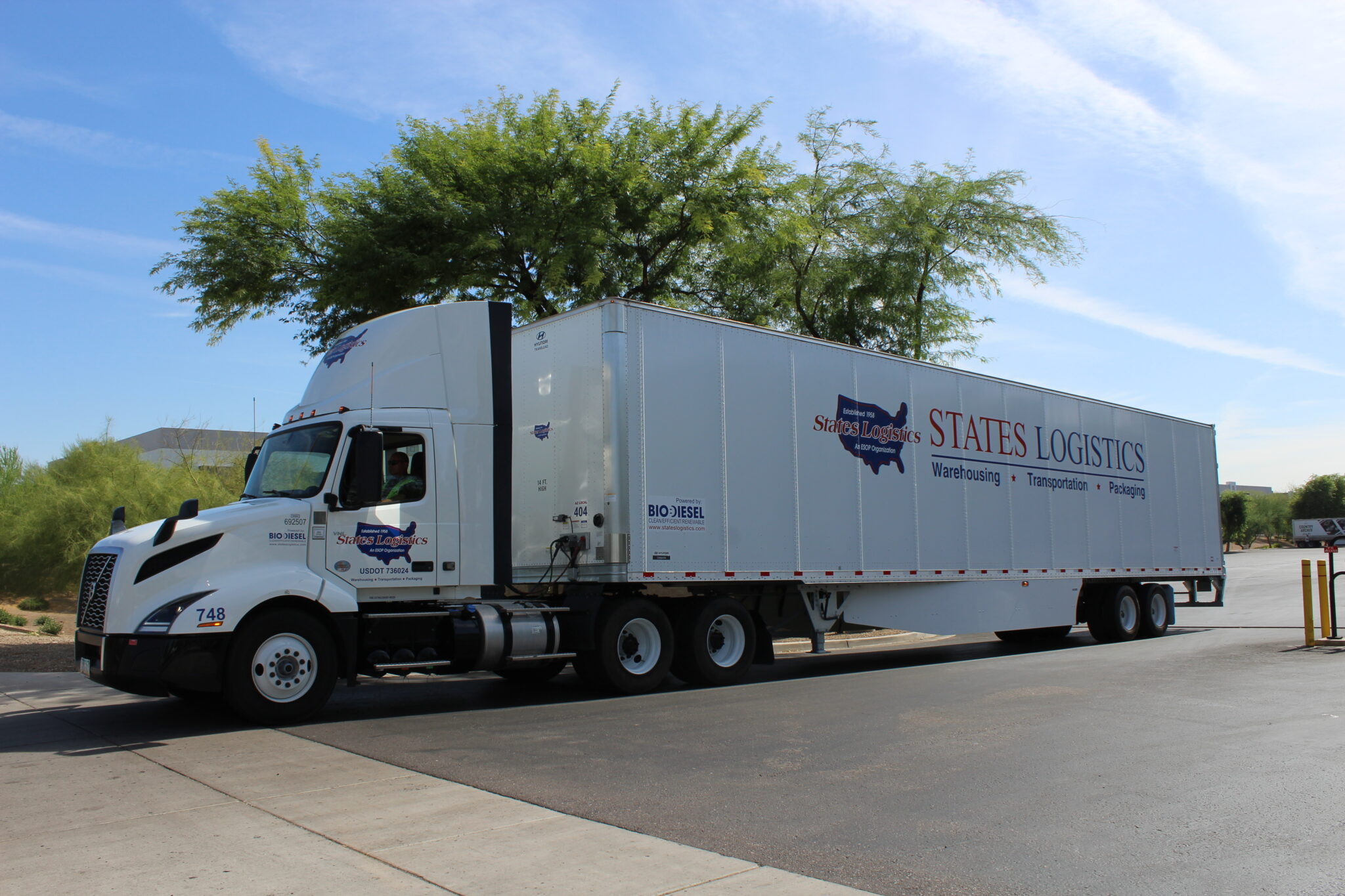
States Logistics’ California locations include facilities across Southern California, with operations listed in Buena Park, La Mirada, Ontario, San Bernardino and Fontana. That footprint gives buyers more than one location to evaluate against their freight lanes. The company’s broader locations overview also includes Arizona operations. <strong>A provider’s network only creates value when it lines up with the movement of your products.</strong>
The existing States Logistics article on West Coast fulfillment geography looks at regional distribution strategy in detail. For a warehouse selection project, turn that geographic thinking into a comparison of actual site options and their operating assumptions.
Which California warehouse model fits your operation?
Public or multi-client warehousing usually allows several customers to share infrastructure and operational resources. It can be appropriate when volume moves around during the year and you don’t need a fully dedicated warehouse operation. Contract warehousing may reserve defined capacity or services for one customer under a more tailored agreement. Neither model has a guaranteed cost advantage without knowing the duration, activity profile and service commitments.
Ask each candidate what would be shared, what would be reserved and which changes require a revised commercial agreement. A company with steady volume but complex retail labeling may be better served by a different arrangement from a brand whose principal challenge is seasonal storage spikes. A site that can handle both may still propose different pricing structures.
The States Logistics warehousing overview describes public and contract services in Southern California and Arizona. During a provider conversation, use that distinction to ask how space commitments, labor capacity and customer-specific processes would be organized for your inventory rather than assuming that every facility has the same available capacity.
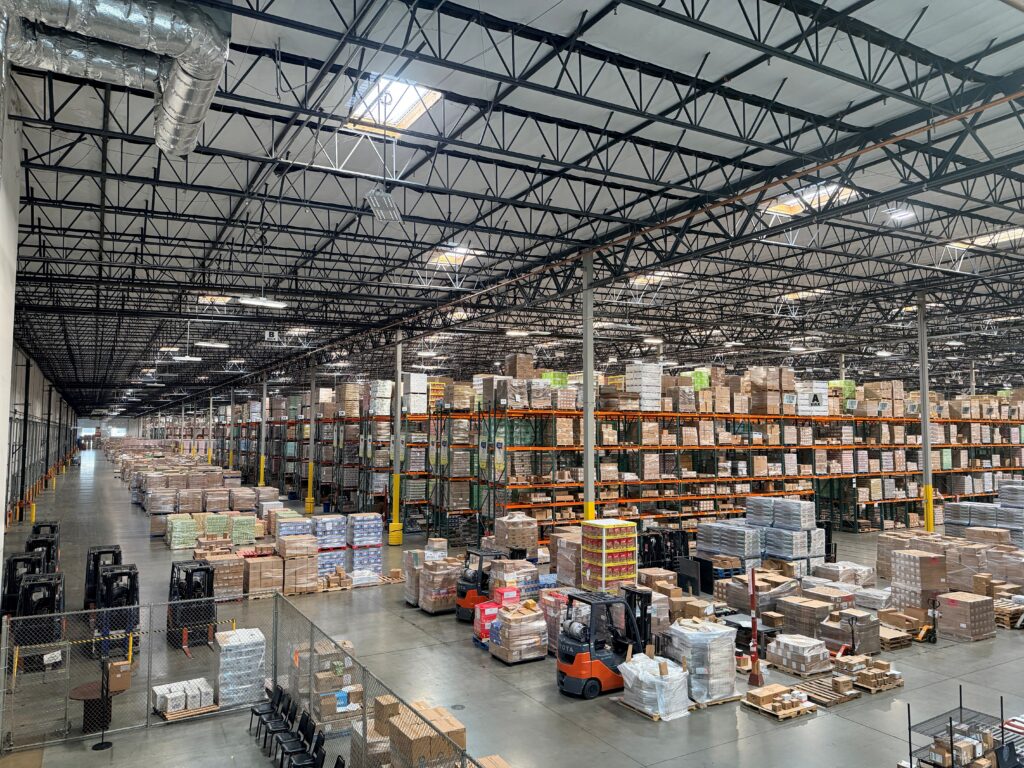
A warehouse model should also account for the kinds of inventory that arrive. Pallet dimensions, stackability, storage conditions and lot tracking can alter the operation. Food and beverage shippers should ask for the exact facility requirements applicable to their products, plus evidence of any certification they need for a specific retailer or category. General claims about a company network cannot replace confirmation for the facility that will actually store the goods.
Compare the full warehousing cost, not one rate
Most buyers receive a storage rate early in the sales process. That number is a starting point, but it doesn’t describe the cost of a month in which products arrive, move through the warehouse and ship to customers. A simple quote comparison should separate recurring capacity costs from activity charges and transportation.
| Cost category | Ask the provider | Your comparable measure |
|---|---|---|
| Storage | How do you measure occupied space and for what period? | Billable positions or volume per month |
| Receiving | What counts as standard unloading and receipt? | Loads, pallets or labor hours |
| Outbound handling | Are full-pallet and mixed-case orders priced differently? | Orders and handling units |
| Special work | Which labels, displays or reworks fall outside normal rates? | Units or projects |
| Technology | Which integrations and reports are included? | Setup and recurring obligations |
| Transportation | What lanes and accessorials are included in the quote? | Shipments and actual lane mix |
| Minimums | Are there fixed monthly commitments? | Quiet-month total |
Run the calculation twice: once for a representative month and once for your busiest expected month. A quote built on average pallets alone can understate peak receiving labor, outbound activity and reserved capacity. Conversely, assuming a peak-level operation every month can make an otherwise sensible agreement appear unnecessarily expensive.
For the transport component, review States Logistics transportation services and ask how warehousing and freight would be coordinated. The company also describes freight consolidation approaches that may be relevant if you send frequent smaller shipments to common retail destinations. The value depends on shipment schedules and destinations; it should be modeled using your own load history.
How to evaluate the facility itself
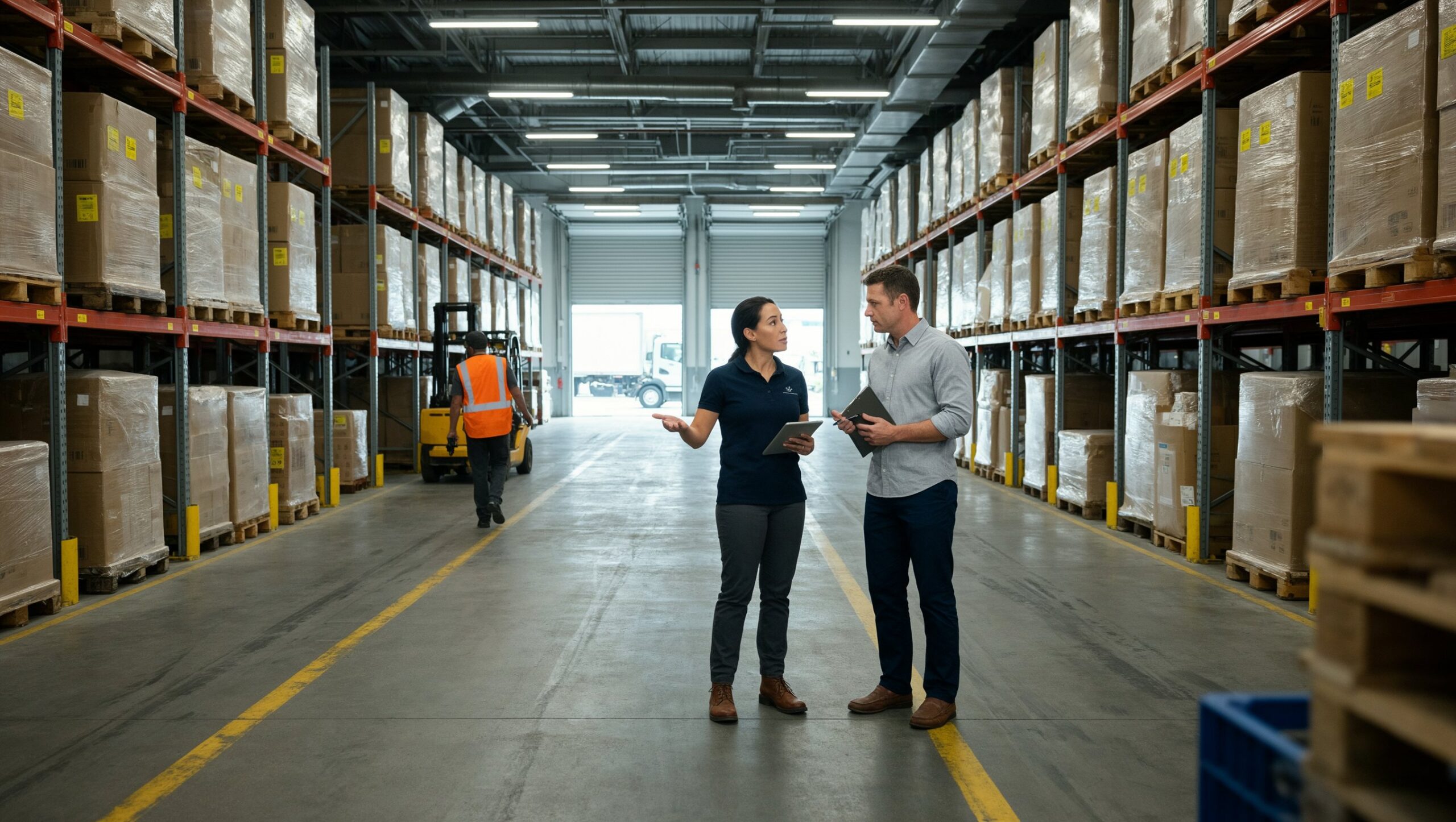
A warehouse visit can answer questions that a proposal rarely resolves. Walk the path of a typical inbound pallet from the receiving dock to its assigned storage location and then through outbound staging. Ask where shortages are recorded, how inventory status changes and who is responsible when a receipt does not match its paperwork.
Observe how a team manages mixed-SKU orders, appointment windows and exception handling. The appropriate level of detail depends on the products. For a food brand with lot-controlled inventory, traceability and rotation procedures may carry more weight than the aesthetics of the racking layout. For a retail distribution operation, outbound labeling and shipment documentation may be the harder problem.
A practical walkthrough should cover these points:
- Receiving process. How are advance notices, counts and discrepancies processed, and when is product available to allocate?
- Storage suitability. What conditions and separation practices apply to the products being quoted?
- Outbound execution. How are retailer instructions, order changes and pickup schedules handled?
- Exception ownership. Who investigates a short shipment or mismatched inventory record?
- System access. What information can the customer see without requesting an email update?
The technology question deserves a real demonstration. States Logistics describes a warehouse management system and EDI capabilities supporting inventory visibility and customer integrations. Ask to see the transactions and reports you would rely on, including inventory adjustments, receipts and orders in progress. Integration capability on a service page is promising, but implementation requirements should be confirmed against your ERP, retailers and internal workflows.
Freight, labor and retailer requirements change the economics
Even within Southern California, two warehouses can produce different total logistics costs. The difference may come from receiving schedules, labor intensity, retailer packaging requirements or the frequency of outbound moves. A lower space rate won’t necessarily offset the cost of extra handling or repeated transfers between providers.
Suppose a food manufacturer imports finished cases, stores them on pallets and ships to retailer distribution centers. The first proposal offers an attractive storage charge, but its co-packing partner operates elsewhere. Promotional cases must be moved to another building and then returned to the shipping network. The second proposal prices storage differently but can perform an agreed secondary-packaging process near the stored inventory. The right comparison includes transfers, handling and scheduling risk, not merely storage.
States Logistics provides contract packaging and other value-added services within its logistics offering. Its published article about kitting and labeling before outsourcing provides relevant operational context for CPG buyers. Ask what work can be performed at the particular candidate facility and how it would be charged.
A buyer should also distinguish basic warehouse capability from a promise to meet every retailer’s rules. Retail labels, pallet configuration, order documents and delivery appointments may be customer-specific. Bring sample routing guides and exception reports into the evaluation, and ask the provider to walk through a real order.
A California 3PL comparison worksheet
The comparison becomes more disciplined when every provider receives the same facts. Use the following fields in your request rather than a short note that says you need warehousing in Los Angeles.
| Input | Information to provide |
|---|---|
| Inventory | Typical and peak pallet positions, SKU count, dimensions |
| Inbound | Origin, frequency, pallets or containers, receipt requirements |
| Outbound | Customer destinations, full-pallet and mixed-case split |
| Special conditions | Product handling, lot rules, packaging and retailer requirements |
| Technology | ERP, EDI, reporting and integration needs |
| Transportation | Representative lanes, volumes, appointment constraints |
| Commercial | Contract length, minimums, expected growth and seasonality |
Use comparable units throughout. If one provider bills storage by pallet position and another quotes dedicated square footage, ask each to price your anticipated physical inventory. If one quote includes transportation while another leaves freight to a separate contract, calculate both options on a consistent basis before ranking them.
You can give each candidate a simple rating for operational fit, cost transparency and the confidence of its implementation plan. Avoid pretending that a single score makes the decision. A provider unable to handle a critical product condition should not win because it quoted a lower monthly total.
When California warehousing is the right starting point
Southern California can be a sensible hub for brands with meaningful inbound volume through Pacific ports or a concentration of Western customers. The actual choice still depends on the movement of your inventory and the service level expected by your customers. If a significant share of shipments serves the Southwest, compare whether California alone is sufficient or an additional Arizona node makes operational sense.
For teams weighing multiple facilities, States Logistics can discuss its California network, regional warehousing services and transportation options. Bring the worksheet, a realistic peak-period profile and a few representative shipment lanes to the first conversation. That gives the provider a basis for an informed proposal and gives you a much better document to compare.
Contact States Logistics to review your distribution requirements and request a facility-specific quote.