A Phoenix warehouse looks appealing on a map. The location sits near major highway routes, your Southwest customers are within the region and the brochure mentions room for growth. Then the operations team starts asking the questions that decide whether the partnership will work: can the facility receive your shipment profile, handle your retailer’s order requirements and connect to the systems your staff uses every day?
Choosing a 3PL in Arizona calls for a facility-level assessment. Geography affects where inventory should sit, but the receiving process, available services and distribution arrangements determine what happens once a product arrives. A Phoenix address won’t solve a complicated order flow on its own.
This checklist is for food, beverage and consumer-goods manufacturers comparing Arizona logistics providers. It covers site suitability, transportation and implementation, with specific prompts you can use during a walkthrough or vendor call.

Match the Arizona location to your customers
Start with actual shipment history, not a list of the states you hope to serve. Sort your outbound orders by destination, frequency, pallet or case count and the service commitments customers expect. If you operate out of California today, identify what portion of your volume consistently moves into Arizona and neighboring markets.
Arizona warehouse decisions can be influenced by inbound manufacturing locations, Mexico-related trade flows, highway access and delivery patterns. Those factors may support a Southwest distribution node, but the economics depend on shipment volume and how inventory is replenished. A second building can reduce outbound miles in some cases while creating new inbound transfers or splitting stock across locations.
States Logistics’ Arizona operations are described in Tolleson and Phoenix. The company publishes facility details and its overall location network covers Southern California too. Use those pages to identify candidate facilities, then validate the actual space and operating capabilities available for your requirements. A company-wide service list is not a commitment that every building can support the same process.
For a broader discussion of regional positioning, the existing guide to West Coast fulfillment geography explains how inventory location connects to service. During selection, turn those principles into a customer-by-customer lane and replenishment analysis.
Evaluate the site, not the sales presentation
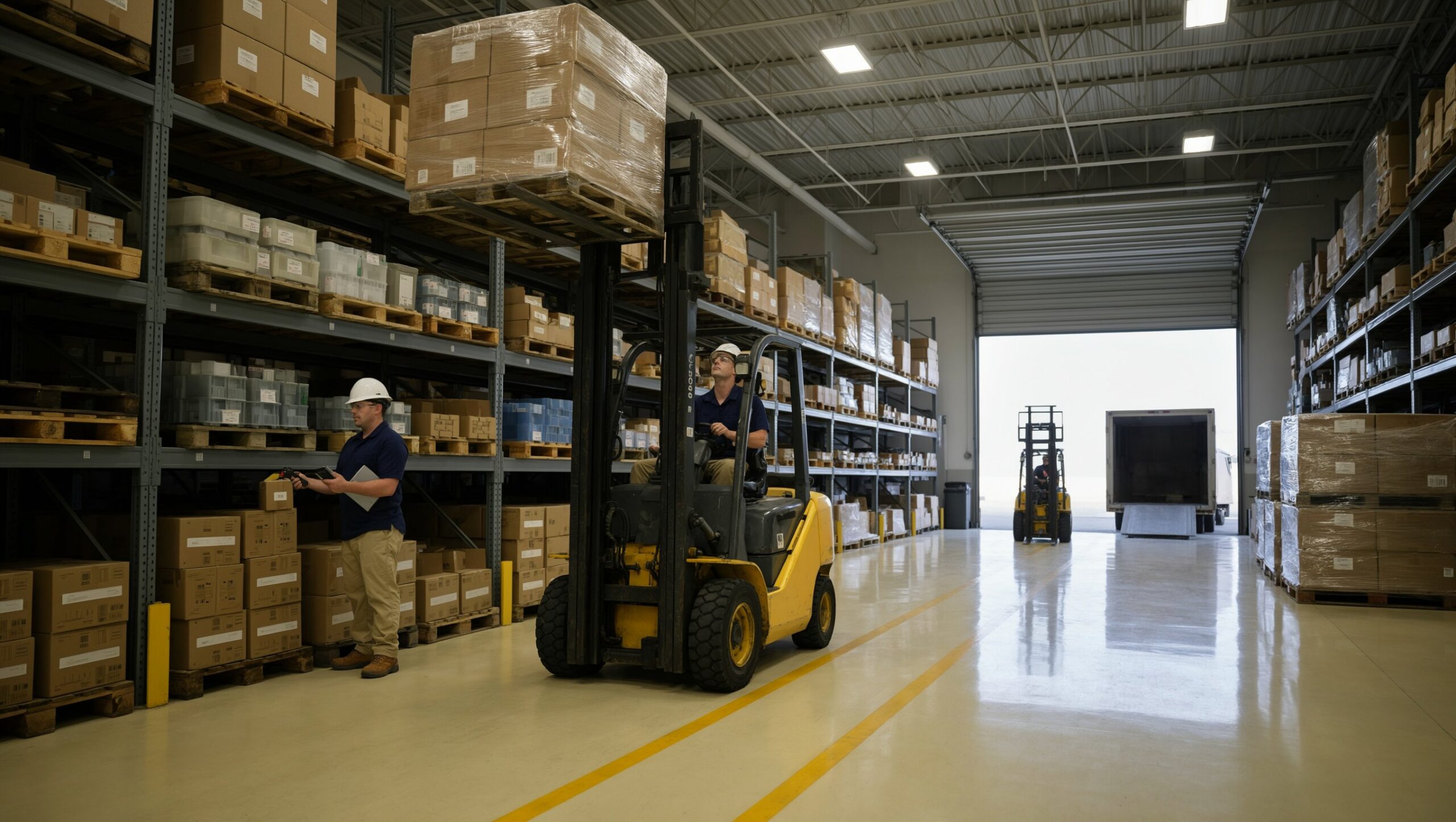
Visit the building that would handle your products. Request a walkthrough of receiving, storage, picking and outbound staging. A well-organized tour should show how the provider manages the work that you intend to outsource rather than a generic description of warehouse capacity.
Take a recent inbound receipt and outbound order with you. Ask the operator to explain how each would travel through the facility, including the documents, system updates and people involved. If your products need particular storage conditions, identify where they would be kept and how those conditions would be managed. Avoid substituting terms such as ‘food grade’ or ‘temperature controlled’ for a documented specification.
| Facility question | Evidence to request | Why it affects the decision |
|---|---|---|
| How much capacity is available for our profile? | Space plan and operating assumptions | Advertised building size is not available capacity |
| Can the site handle our pallets and inbound loads? | Dock and receiving workflow | Unusual shipments may add cost or delay |
| What storage conditions are supported? | Product-specific operating specification | Suitability depends on the goods |
| How are lots and inventory statuses tracked? | System demonstration | Supports traceability and order accuracy |
| How is retailer-specific work managed? | Sample order and routing-guide walkthrough | Prevents surprises during launch |
| What happens during volume peaks? | Staffing and escalation approach | Peak execution is part of service quality |
States Logistics describes public and contract warehousing across its Arizona and California network. Public warehousing can offer a shared operating setup while a more dedicated contract arrangement may provide committed resources. Ask how either model would work for your seasonal volume, not which sounds more sophisticated.
Food and beverage requirements need specific proof
Food manufacturers often begin their search with a list of certifications. That list is worth reviewing, but it shouldn’t replace an examination of everyday handling practices. The appropriate standard depends on what the product is, where it goes and the obligations of the shipper, facility and customer.
Ask for current documentation relevant to the specific Arizona facility and the products it would handle. If a retailer requires a particular audit or a manufacturer has its own storage specification, provide that requirement in writing. Check whether the proposed location meets it rather than relying on company-wide marketing language.
During the site visit, ask how the team handles damaged goods, segregated inventory, hold statuses, rejected receipts and a request to identify a specific lot. The staff should be able to explain how each exception is recorded and who approves the next action. That conversation may be more revealing than a long certificate list without a matching operational walkthrough.
For related context, States Logistics has published an article about organic labeling and logistics partners and one about retail compliance and chargebacks. Use them to build questions for the provider; confirm current policies and certifications directly rather than copying general statements into your contract.
Check how the Arizona 3PL handles transportation
A warehouse can perform its internal work well yet leave your team with a difficult freight operation. Ask who arranges pickups, which legs use an asset-based service versus brokerage and how exceptions reach the people responsible for retail accounts.
If you ship smaller batches to shared distribution points, ask whether consolidation is relevant to your order pattern. States Logistics describes a multi-vendor freight consolidation program and transportation services for customers in its regional network. Those programs are worth evaluating with real lanes and pickup schedules instead of assumptions about automatic cost savings.
Transportation proposals should specify the services included and the basis for additional charges. Time-sensitive retailer appointments, changes in volume and rejected deliveries can all change how freight is managed. Ask how issues are communicated and documented before deciding that a quoted lane rate is sufficient.
For businesses with inbound containers or rail-connected activity, transloading services may also warrant discussion. A relevant capability only improves your network if your shipment pattern supports it, so include expected origins, destinations and handoffs in your request.
Technology should work with your actual order flow
A provider’s technology page may list EDI, real-time inventory visibility and warehouse management functionality. Those are starting points for an implementation discussion. They tell you little about the effort required to connect the systems, test mappings and handle exceptions after launch.
Ask the team to demonstrate the reports that your planners and customer-service staff will use: inventory by SKU, available versus held stock, inbound receipts, outbound order status and adjustments. If your company exchanges orders and shipping notices with major retailers, provide sample transaction requirements. The provider should explain the division of responsibilities for mapping, validation and issue resolution.
States Logistics publishes details of its WMS and integration capabilities, including EDI. You can use that overview to prepare a live demonstration request and a test plan. Include at least one imperfect order. Real operations involve shortages, substitutions and delayed receipts, and you need to know how those cases appear to your team.
Calculate the true cost of an Arizona warehouse
Warehouse costs extend beyond occupied positions. The provider may charge for inbound receiving, outbound handling, value-added work, integration and transportation. A proposal can also include minimum commitments or fees tied to changes in scope. Compare those components using an identical operating profile for every bidder.
A good comparison includes an ordinary month and a peak month. If your business launches a promotion, inbound shipments may arrive in concentrated batches and outbound orders can shift toward mixed cases or retail-ready displays. Your expected workload changes even when the number of products in the catalog stays the same.
For each candidate, request the same breakdown:
- Storage units and billing period, including any minimum commitment.
- Inbound receiving and exception-handling assumptions.
- Outbound units, order types and special retailer work.
- Transportation lanes, service coverage and exclusions.
- Implementation fees and recurring technology charges, if applicable.
If contract packaging or value-added warehouse services are part of your process, include those tasks in the cost comparison. A quote that excludes the work may appear lower while requiring another vendor and an additional movement of inventory.
Prepare a useful facility evaluation scorecard
A weighted scorecard can help a procurement team explain its decision. It works best after you establish the requirements that cannot be compromised, such as product suitability, required customer documentation and the ability to process your order type.
Rate each provider against operational fit, location and lane coverage, data visibility, the clarity of its commercial terms and the quality of its implementation plan. Record the evidence beside the rating. A score of four out of five means little if nobody can remember which warehouse process earned it.
A provider with an attractive rate and a poor exception-handling process may create enough customer-service work to wipe out the savings. Conversely, a strong implementation plan can be valuable even when the base storage rate isn’t the lowest. The scorecard should make those tradeoffs visible rather than hide them in a single total.
What to send a 3PL before requesting an Arizona quote
Send a short operational brief that includes SKU and pallet characteristics, average and peak inventory, inbound origins, outbound destination mix, retailer requirements, anticipated special handling and the systems that must be connected. Attach sample order documents where possible. The strongest vendor discussions begin with real operating evidence.
For the Arizona shortlist, ask States Logistics to assess the available options at its Phoenix and Tolleson facilities against your inventory and shipping profile. Confirm the relevant capabilities of the specific site and ask for pricing that separates storage, handling and freight so your team can compare it fairly.
You can contact States Logistics to discuss Arizona 3PL requirements and request a location-specific proposal.